Against the Transparent Window: The Glitch as Material Evidence
For more than five centuries, Western pictorial representation has been haunted by Leon Battista Alberti’s dictum of the finestra aperta—the painting, and subsequently the photographic negative, conceived as an open window looking through to an unblemished perspective space. What occurs when the window is violently made opaque?
1. The Myth of Photographic Transparency
Classical photographic ontology, formulated in its most seductive iteration by Roland Barthes [BARTHES-1980], insists upon an umbilical connection between referent and emulsion. The signifier is treated as a transparent vehicle through which the past radiates. Yet, this transparency is neither natural nor innocent; it is the calculated achievement of an industrial apparatus designed to conceal its own mechanical operations.
Vilém Flusser warned in 1983 that the danger of the photographic apparatus lies precisely in its invisibility [FLUSSER-1983]. The machine is programmed to translate three-dimensional space into a rectangular, seamless, legible surface. In doing so, it conditions the operator to perceive only what the apparatus permits. To create experimental photography, one cannot merely take pictures with the apparatus; one must create work against it.
“The apparatus requires human beings to feed it, but it also programs them. The photographer who plays against the apparatus is the only one who extracts freedom from the machine.”
— Vilém Flusser, Towards a Philosophy of Photography
2. Scanographic Drag & Sensor Resistance
In my studio work with flatbed scanning technologies (most notably embodied in Plate 02: Spectral Dissolution), the operational premise is fundamentally non-representational. Rather than allowing the motorized carriage to glide across stationary paper at its automated velocity of 12 millimeters per second, physical drag is exerted against the glass platen.
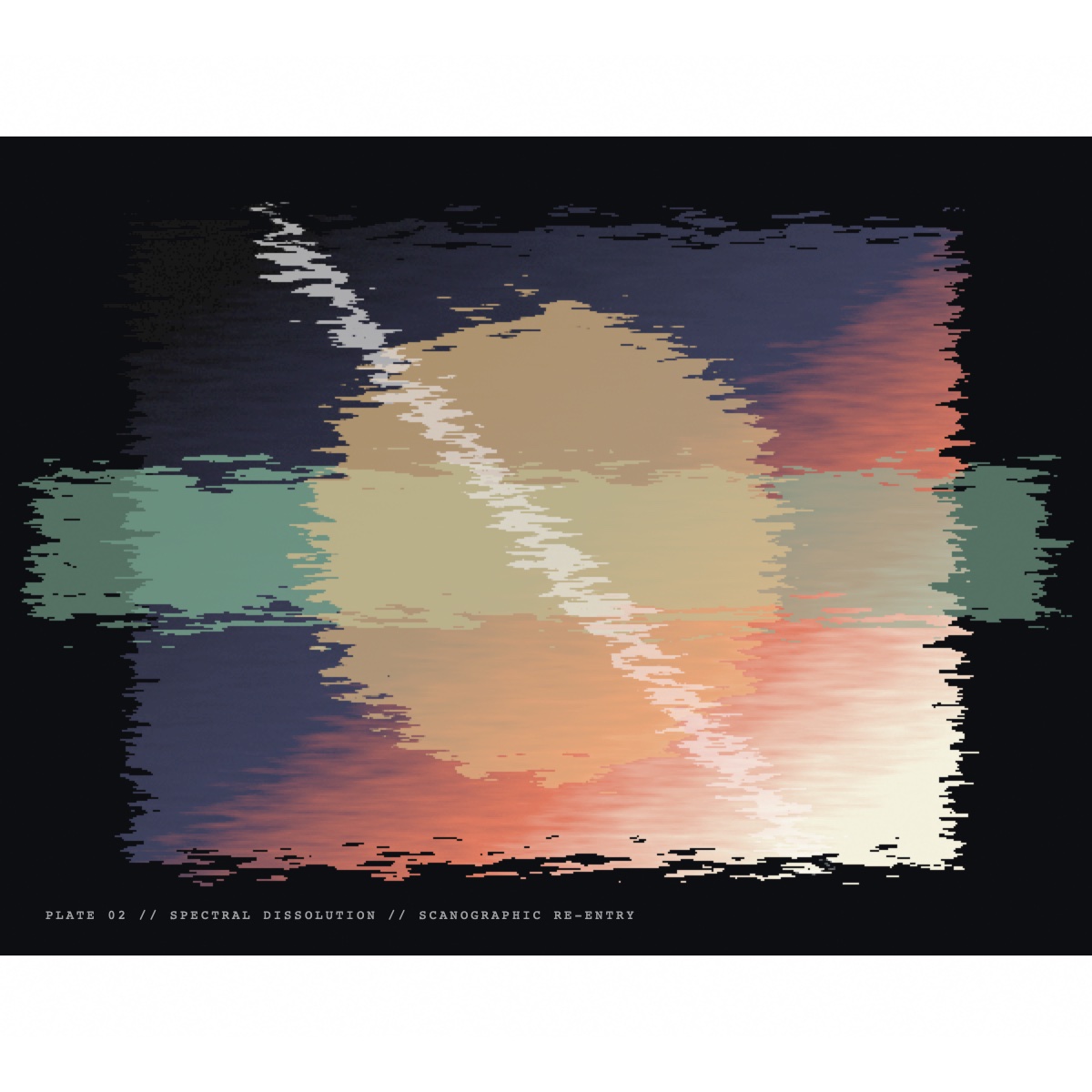
The consequence of this physical interference is immediate: the three-color charge-coupled device (CCD) array—which reads light sequentially across spaced lines of red, green, and blue filters—stutters. Time, which is normally compressed into a fraction of a millisecond in shutter-based photography, is elongated across sixty seconds of physical struggle. The resulting image is not a depiction of an external subject, but an indexical transcript of the interaction between machine carriage and human arm.
3. Chemical Violence as Counter-Digital Strategy
Simultaneously, the studio practice engages in direct chemical intervention on gelatin silver substrates (evidenced in Plate 01: Latent Artifact). Here, developer and potassium ferricyanide bleach are deployed not to realize an exposure, but to dissolve the gelatin matrix itself.
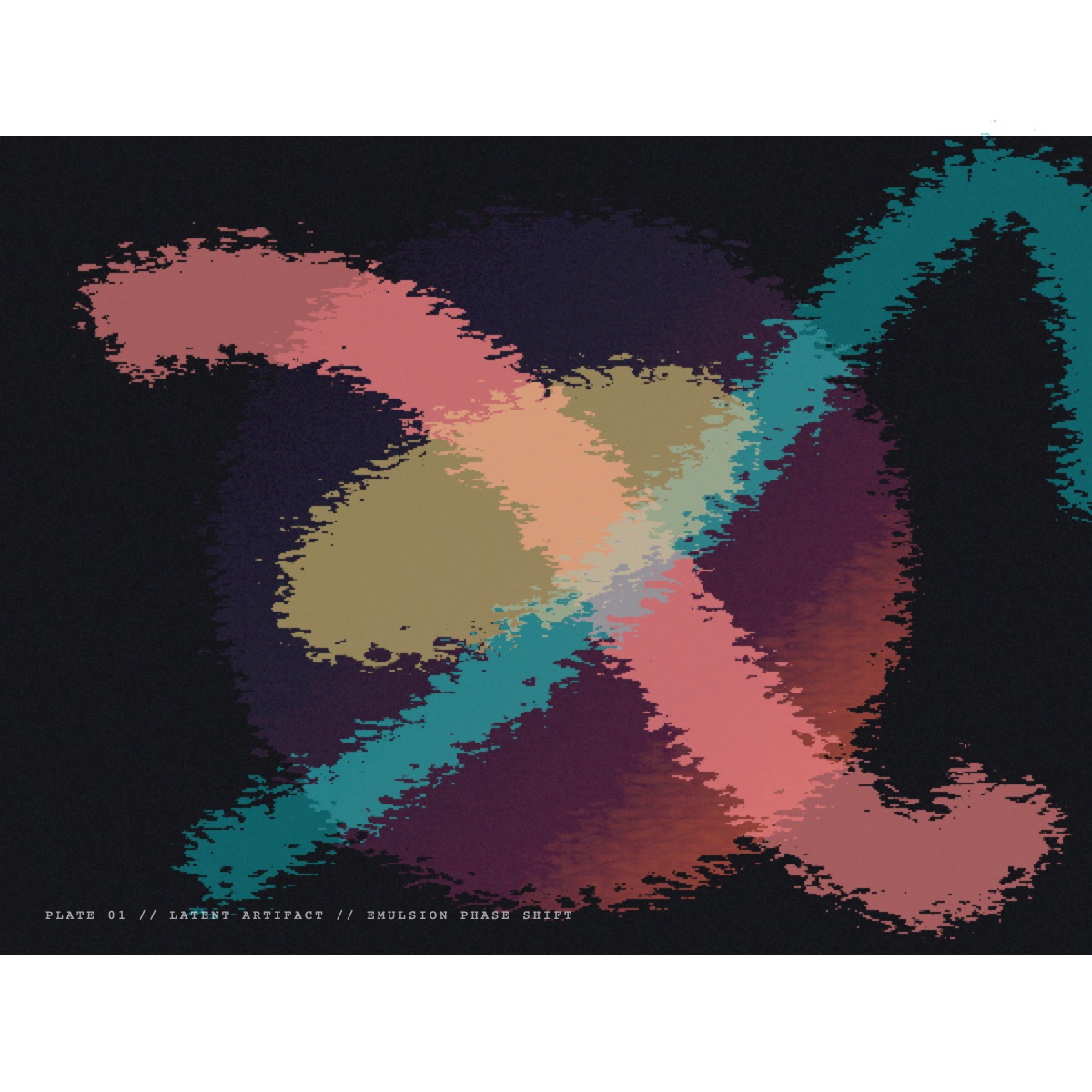
James Elkins observes in What Photography Is [ELKINS-2011] that photographic chemistry possesses a stubborn, inhuman strangeness. When we bleach away the representational image, we are left with the raw metallic silver suspended in animal protein. The work becomes an opaque object, refusing to offer a reassuring window into an outside reality. It insists, with obstinate force, on its own material presence.
Chapter References & Citations
- Barthes, Roland. (1980). Camera Lucida: Reflections on Photography. Translated by Richard Howard. New York: Hill and Wang. [View in Biblio]
- Batchen, Geoffrey. (2000). Each Wild Idea: Writing, Photography, History. Cambridge, MA: MIT Press. [View in Biblio]
- Elkins, James. (2011). What Photography Is. New York: Routledge. [View in Biblio]
- Flusser, Vilém. (1983). Towards a Philosophy of Photography. Göttingen: European Photography. [View in Biblio]
- Menkman, Rosa. (2011). The Glitch Moment(um). Amsterdam: Institute of Network Cultures. [View in Biblio]